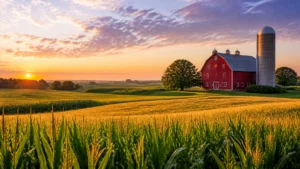
If you’ve ever taken a slow drive down Powerline Road or wound your way through the quiet beauty of Bethel Road on a crisp spring morning, you know exactly what’s at stake when we talk about our land. I travelled out that way just last week, and as the sun caught the morning dew on the lush farmland, it hit me again: this isn't just "dirt" or "acreage." This is the very heart of the County of Brant.
However, behind the stunning historic architecture of our old farmhouses and the quiet rows of emerging crops, a complex battle is brewing in the County of Brant Council Chambers. It’s a debate over three characters that most residents might not think about at the dinner table: A-9.
On May 12, 2026, our local leaders stood at a crossroads during a heated debate over surplus farm-dwelling severances and the zoning laws that govern them. It was a meeting filled with technical jargon like "site-specific agricultural zones" and "Provincial Policy Statements," but at its core, it was a conversation about who we are and what our community will look like for our grandchildren.
Deciphering the Jargon: What is A-9 Zoning?
For those of us who aren't planning experts, the term "A-9" sounds like a flight number or a vitamin. In reality, it is a critical tool used to protect our agricultural heritage.
When a farmer owns multiple properties and decides they no longer need one of the houses (a "surplus farm dwelling"), they can apply to sever that house from the farmland. This allows the house to be sold as a residential lot while the remaining land: the "remnant parcel": continues to be farmed.
Under the current rules, that remnant parcel is hit with an A-9 zoning code. This code is a strict "no-house" rule. It ensures that the severance doesn't accidentally create a brand-new building lot in the middle of a field. According to recent staff reports, this policy has already created over 4,000 hectares of farm parcels across the County where no house can ever be built.

The Fragmentation Crisis: Standing at a Crossroads
I had no idea until this recent debate that our landscape is becoming so fragmented. Planning staff presented some eye-opening figures: over 60% of properties in the County’s prime agricultural area are now 10 hectares or less. That is roughly 2,370 out of 3,870 properties.
Why does this matter to us? When farmland is broken into tiny pieces, it becomes harder to manage, more expensive to farm, and more vulnerable to being swallowed up by non-farm uses. Staff argued that while our current rules were meant to help, they are actually separating houses from farms without a clear long-term benefit to the broader agricultural system.
We are essentially creating a patchwork quilt of "orphan" fields: land that is being farmed but has lost its connection to a farmhouse. This is what planners call a "systems-based" concern. It’s the idea that a hundred small, individual decisions are adding up to one big problem for our collective future.
Kitchen Table Conversations: The Farmer’s Perspective
While the planners look at the maps, farm families are looking at their ledgers and their legacies. These aren't just policy discussions; they are kitchen table conversations about survival and succession.

During the council meeting, Councillor Chambers emerged as a vocal defender of the status quo. He argued that the A-9 zoning code has "time and time again" assisted farm families. In his view, these severed parcels aren't "orphans": they are high-demand fields for livestock and cash crop operations that need extra land to remain viable.
To many in our community, being able to sever a surplus house is a way to unlock equity, house a retiring parent, or make a farm expansion financially possible. It’s a tool for fiscal responsibility at the family level, even if the planners see it as a hurdle at the county level.
A Clash of Visions: The Council Debate
The atmosphere in the Council Chambers was professional yet urgent. You could feel the weight of the decision. On one side, you had staff proposing a stricter consolidation rule: requiring farmers to merge the remnant land with an adjacent parcel rather than just any farm they own in the area. On the other side, you had councillors worried about the impact on individual property rights and family farm viability.
Here is a quick breakdown of the competing viewpoints shared during the debate:
-
The Planning Staff Perspective:
- Goal: Long-term protection of the agricultural system.
- Concern: Current policies lead to "land fragmentation" and don't actually encourage consolidation.
- Proposal: Tighten rules so that severances only happen if the land is joined with a direct neighbour.
-
The Pro-A-9/Status Quo Perspective (Led by Cllr. Chambers):
- Goal: Flexibility for farm families.
- Concern: Changing the rules now would hurt the viability of existing operations.
- Argument: A-9 fields are actively used and vital for local livestock and crop production.
The debate reached a fever pitch when a motion to keep the policy exactly as it is was put to a vote. Mayor David Bailey and Councillors Brian Coleman, David Miller, and Chambers voted in favour, but the motion was ultimately defeated.

Our Collective Future: What Happens Now?
The result? A bit of a stalemate. Councillor John Bell moved to table the report in its entirety. It was clear that the council needed more time to weigh the "relative benefits of dropping A-9 or changing it." The motion to table passed unanimously, which means the "A-9" debate is far from over.
For now, the existing rules stay in place. If you are a landowner looking at a severance, nothing has changed yet. But the Countdown is On! ????️ As we approach the municipal elections, these are the types of "Localism" issues that will define our candidates.
(Note: Re-using the rural landscape theme to emphasize the peace before the policy shift.)
Wait: actually, let’s look at that beautiful road one more time.
The quiet beauty of our county is something we often take for granted. But as we’ve seen, the lines on a map: the zonings, the severances, and the "A-9s": are the invisible forces shaping what we see when we look out our windows.
It is our civic duty to stay engaged. Whether you live in a historic home in Paris or manage hundreds of acres in Ward 5, these decisions affect your property value, your food security, and the "Simply Grand" character of our home.
You can stay updated on the latest developments by checking the Official News section of our site or following the Ward 5 by-election coverage for more local insights.
Do you think we should make it harder to sever farmhouses to protect our land? Or should farm families have more freedom to manage their property as they see fit? Drop your thoughts below!